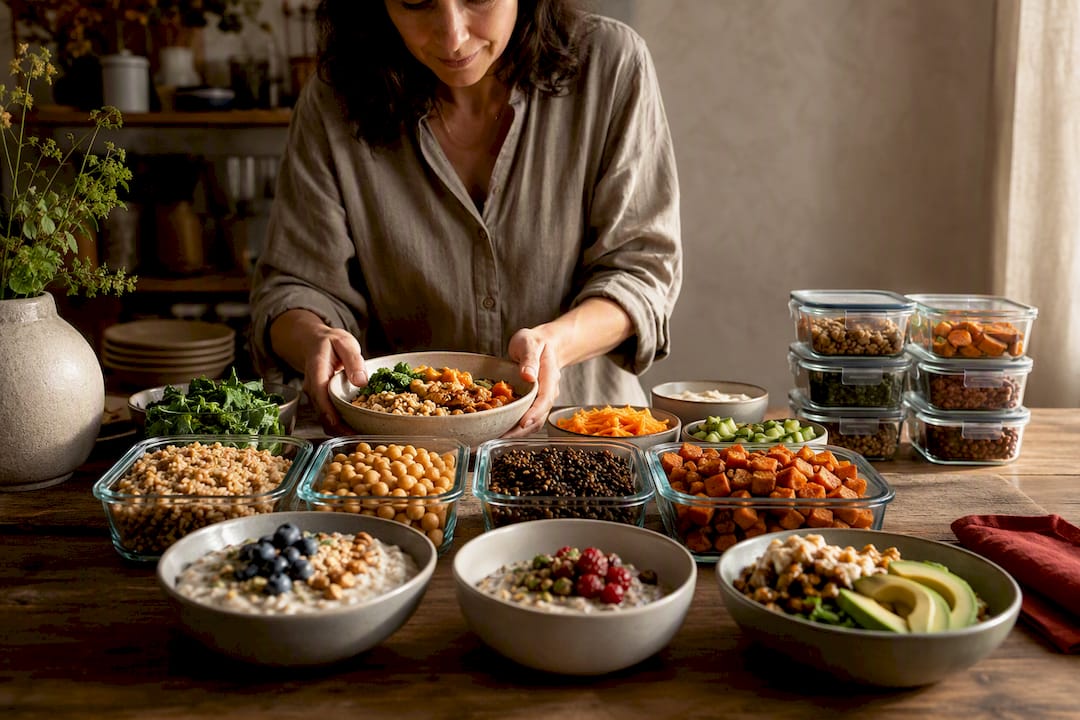
The most reliable approach to gut health meal planning combines three habits: eating 30 or more distinct plant foods a week, hitting a daily fiber range of roughly 25 to 35 grams, and adding one serving of fermented food every day. Pair that with a two-hour weekend batch-cooking session, and you have a system that survives busy weeknights instead of collapsing by Wednesday.
TL;DR:
- Increasing fiber gradually to 25-35 grams per day helps avoid discomfort and supports gut health, especially when ramping up from a lower intake.
- Consuming over 30 different plant foods weekly significantly boosts gut microbial diversity compared to fewer varieties.
- Including one serving of fermented foods daily, such as yogurt or kimchi, enhances microbiome diversity and reduces inflammation markers.
- Limiting added sugar and ultra-processed foods is crucial, as high sugar intake disrupts microbiome balance and increases inflammation.
- Batch-cooking and flexible meal assembly help sustain a diverse, fiber-rich, and fermented-food-inclusive gut health plan amid a busy schedule.
Table of Contents
- What Are the Core Rules of Gut-Focused Meal Planning?
- Your Adaptable 7-Day Starter Meal Plan
- How Do You Shop and Batch-Cook for a Full Week in One Session?
- How Do You Customize This Plan for Low-FODMAP, Vegetarian, or Gluten-Free Needs?
- What Meal-Prep Habits Keep a Gut Health Plan Sustainable?
- How Does Homecooked Help You Personalize This Plan?
- Why Does Hydration Matter for Gut Health?
- Does Meal Timing Affect Digestion?
- How Do You Spot Gut-Harming Ingredients on a Food Label?
- Author Perspective: Why Consistency Beats Quick Fixes
- Let Homecooked Handle the Planning While You Handle the Cooking
- Sources
What Are the Core Rules of Gut-Focused Meal Planning?
Gut health responds to consistency more than perfection, and a handful of rules do most of the work. Get these right and the rest of your meal plan can flex around your schedule, your taste, and whatever is on sale at the store.
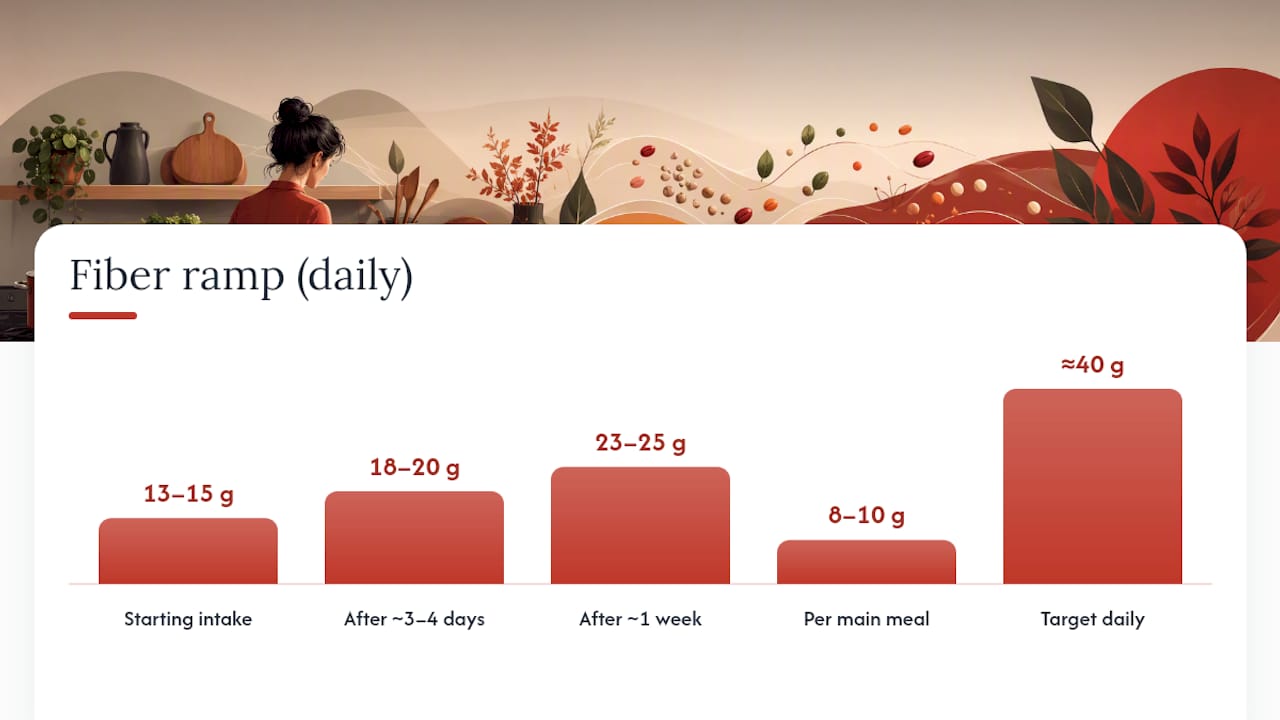
Fiber is the foundation, but the ramp matters more than the target. Dietitian-built plans typically aim for a daily fiber intake in the mid-to-high range considered supportive of gut health, built into meals that spread the load across breakfast, lunch, and dinner rather than dumping it all at once. If you’re currently eating 12 to 15 grams a day, jumping straight to 40 will leave you gassy and miserable. Increase by about 5 grams every three to four days instead, and aim for 8 to 10 grams per main meal as you climb toward your target, according to Harvard’s fiber research.
Plant diversity beats plant quantity. Eating more than 30 distinct plant foods a week is linked to noticeably higher gut microbial diversity compared with eating 10 or fewer varieties, based on the American Gut Project’s research. “Plant foods” isn’t limited to vegetables. It includes fruits, whole grains, legumes, nuts, seeds, and even herbs and spices. A curry with five spices, a base of lentils, and two vegetables can knock out eight plant types in one bowl.
Fermented foods belong in the daily rotation, not the occasional splurge. A controlled trial found that increasing fermented food intake raised microbiome diversity and lowered several inflammatory markers, according to a Stanford report. Good daily options and rough serving sizes:
- Plain yogurt or kefir: ¾ to 1 cup
- Kimchi or sauerkraut: 2 to 3 tablespoons
- Miso: 1 tablespoon stirred into soup or dressing
- Tempeh: ½ cup, cubed and pan-seared
Limit added sugar and ultra-processed foods. High added sugar intake is tied to a disrupted microbiome and higher inflammation markers, which is why most gut-focused plans cap added sugar and lean on whole ingredients instead, per EatingWell’s sugar-focused plan. Watch for sneaky sources in sauces, granola, and flavored yogurt.
For calories and protein, don’t overthink it. Most gut-supportive plans run around a moderate daily calorie intake with protein levels suitable for average adult needs, adjustable up or down based on your size and activity.
Your Adaptable 7-Day Starter Meal Plan
This plan runs at a moderate calorie level and includes fiber and protein amounts designed to support gut health. Swap notes cover vegetarian, dairy-free, and low-FODMAP needs. If you’re new to high fiber, start at day 1’s lower end and build up using the ramp protocol above.
- Monday: Overnight oats with kefir, berries, and chia seeds; lentil soup with a side of sauerkraut; sheet-pan salmon with roasted broccoli, carrots, and farro. Vegetarian swap: white beans instead of salmon.
- Tuesday: Greek yogurt with walnuts, sliced pear, and a drizzle of honey; big salad with chickpeas, roasted sweet potato, pumpkin seeds, and a tahini dressing; turkey chili loaded with three bean varieties and bell peppers. Low-FODMAP swap: firm tofu instead of chickpeas, limit to ¼ cup canned lentils.
- Wednesday: Miso-glazed eggs on whole-grain toast with avocado; leftover turkey chili; stir-fry with tempeh, snap peas, shredded cabbage, and brown rice. Dairy-free swap: coconut-based yogurt at breakfast instead of eggs if preferred.
- Thursday: Smoothie with spinach, frozen mango, kefir, and ground flaxseed; quinoa bowl with roasted cauliflower, kimchi, and a soft-boiled egg; baked cod with garlic sautéed greens and mashed white beans. Vegan swap: canned coconut yogurt in the smoothie, marinated tempeh instead of cod.
- Friday: Whole-grain toast with cottage cheese, sliced tomato, and hemp seeds (try the cottage cheese protein bowl for a heartier version); leftover cod and greens; bean and vegetable chili with a dollop of plain yogurt.
- Saturday: Vegetable frittata with mushrooms, spinach, and feta; big grain bowl with farro, roasted root vegetables, sauerkraut, and a lemon vinaigrette; homemade bibimbap with an egg, spinach, carrots, and gochujang (full bibimbap recipe here). Low-FODMAP swap: skip onion and garlic in the frittata; use scallion greens only.
- Sunday: Chia pudding with kefir, sliced kiwi, and almonds; leftover bibimbap components reassembled into a wrap; roast chicken with roasted Brussels sprouts, wild rice, and a side of kimchi.
Two daily snacks round things out, with portion adjustments possible to accommodate lower or higher calorie needs.
How Do You Shop and Batch-Cook for a Full Week in One Session?
Batch-cooking components rather than whole meals holds up better over time, since you can mix and match instead of eating the same bowl five days straight, according to practical meal-prep guidance. Organize your shopping list by section so you’re not crisscrossing the store twice.
- Produce: broccoli, carrots, sweet potatoes, cauliflower, cabbage, spinach, bell peppers, snap peas, tomato, avocado, berries, pear, mango, kiwi
- Proteins: salmon, cod, chicken, eggs, turkey, tempeh, tofu
- Pantry: farro, brown rice, wild rice, three canned bean varieties, lentils, quinoa, chia seeds, hemp seeds, walnuts, almonds
- Fermented and dairy: kefir, plain yogurt, miso paste, kimchi, sauerkraut, cottage cheese, feta
On your prep day, roast two full sheet pans of vegetables at once, boil a large batch of grains, cook beans and lentils if starting from dry, and whisk two dressings (a tahini one and a lemon vinaigrette). Store each component in a separate labeled container. Cooked grains and roasted vegetables hold for four to five days refrigerated. Fermented items like kimchi and sauerkraut are already shelf-stable in the fridge; add them cold at the end of reheating so you don’t kill off the live cultures with high heat.
How Do You Customize This Plan for Low-FODMAP, Vegetarian, or Gluten-Free Needs?
The starter plan is built to flex, not restrict, and most adjustments are simple substitutions rather than overhauls. Many practitioners caution against jumping into a restrictive elimination diet without guidance, favoring an approach that adds diverse plants and fermented foods first, per practical planning guidance.
- Low-FODMAP: swap onion and garlic for the green tops of scallions, cap legumes at ¼ cup per serving, and choose lactose-free kefir or hard cheeses. Talk to a dietitian before extending any elimination phase beyond two to six weeks. Our low-FODMAP starter guide walks through a full week of these swaps.
- Vegetarian or vegan: lean on tempeh, miso, lentils, and coconut-based probiotic yogurts for both protein and fermented coverage. Check out our vegetarian meal planning guide for portion ratios.
- Gluten-free: replace farro and wheat toast with quinoa, brown rice, or gluten-free oats; fiber and plant variety stay intact since neither swap sacrifices produce.
- Bloating or discomfort: slow the fiber ramp to +5 grams every 3 to 4 days, and drop back a step if symptoms flare before pushing forward again.
What Meal-Prep Habits Keep a Gut Health Plan Sustainable?
Batch-cooking individual components beats prepping five identical meals, because your taste buds get bored around day three no matter how good the recipe is. Build your week around a simple plate model instead: half the plate is vegetables or fruit, a quarter is a grain or starch, and a quarter is protein, with a fermented side added daily.
- Roast, boil, or steam your components once on the weekend, then reassemble them into new combinations each day.
- Rotate two or three snack options (fruit and nut butter, yogurt and seeds, hummus and vegetables) so you’re not eating the same thing on repeat.
- Lean on herbs and spices generously. Each one counts toward your plant variety, and a spice shift can make the same roasted vegetables taste like a different meal entirely.
- Keep one new plant food on your list each week to slowly expand your variety past 30.
Pro Tip: Make one big batch of a versatile dressing, like a lemon tahini sauce, and use it on three different meals across the week. It turns “leftover farro and roasted vegetables” into a completely different dish depending on what you drizzle on top.
How Does Homecooked Help You Personalize This Plan?
The plan can be adapted around individual calorie targets, protein needs, and dietary preferences. Customized shopping lists and step-by-step guided recipes help simplify meal preparation, including adjustments for low-FODMAP or vegetarian options without the need to recalculate fiber or protein. For more recipe inspiration, browse the gut health recipe collection or the high-fiber meal planning guide.
Why Does Hydration Matter for Gut Health?
Fiber and water work as a pair, not separately. Soluble fiber absorbs water to form a gel that slows digestion and feeds beneficial bacteria, while insoluble fiber adds bulk to stool that helps move waste through your system. Neither works well if you’re dehydrated. Without enough fluid, increasing fiber intake can actually make constipation worse instead of better, which is one of the most common mistakes people make when ramping up fiber too fast.
A practical target is drinking water steadily throughout the day rather than chugging it all at once, aiming to keep urine pale yellow as a rough gauge. Herbal tea, water-rich fruits like watermelon and oranges, and broths all count toward your fluid intake, not just plain water.
If you’re traveling or your routine gets disrupted, hydration and meal timing tend to slip together, which is part of why practical holiday nutrition tips usually highlight water intake as a top priority alongside meal planning. Pack a reusable water bottle when you travel and treat refilling it as part of your meal routine, the same way you’d plan lunch.

Does Meal Timing Affect Digestion?
Your gut runs on rhythm more than most people realize. Eating at roughly consistent times each day helps regulate the migrating motor complex, the wave-like muscle contractions that clear leftover food and bacteria from your small intestine between meals. Constant grazing throughout the day can interrupt this process, since it never gets the multi-hour gap it needs to finish a full cleaning cycle.
Three meals with one or two planned snacks tends to work better for digestion than six small grazing sessions, though the ideal frequency varies by person and by any existing digestive condition. What matters more than the exact number of meals is avoiding long stretches of nothing followed by one enormous meal, which tends to trigger bloating and sluggish digestion in people prone to gut sensitivity.
Late, heavy dinners are a common culprit behind morning bloating and poor sleep. Aim to finish eating two to three hours before bed so your gut has time to move food along before you lie down. If you’re following the 7-day starter plan above, that usually means shifting dinner earlier rather than skipping it.
How Do You Spot Gut-Harming Ingredients on a Food Label?
Ingredient lists are ranked by weight, so whatever appears in the first three items makes up the bulk of the product. If sugar, corn syrup, or one of its aliases (dextrose, maltose, cane juice) shows up early, that product is contributing meaningfully to your added sugar intake regardless of how it’s marketed.
Watch for these common flags:
- Added sugars under aliases: high-fructose corn syrup, dextrose, maltodextrin, and “fruit juice concentrate” all count as added sugar even when the front label says “no sugar added.”
- Emulsifiers like carboxymethylcellulose and polysorbate 80: some research links these to disrupted gut lining and inflammation, though evidence is still developing.
- Long lists of unrecognizable additives: a general rule of thumb is that if you can’t picture the ingredient in a kitchen, treat it as a flag worth noticing.
- “Low-fat” or “diet” labeling: these products frequently compensate for removed fat with added sugar or starch.
Check the fiber line on the nutrition panel too. A product boasting “high fiber” should have at least 5 grams per serving. Anything labeled “excellent source of fiber” should hit closer to 20 percent of the daily value per serving.
Author Perspective: Why Consistency Beats Quick Fixes
Real gut changes take weeks, not days, and the plan that works is the one you can repeat, not the one that promises the fastest results. Track how you feel, not the calendar.
— 0xmaglev
Let Homecooked Handle the Planning While You Handle the Cooking
This app aims to streamline the transition from meal planning to cooking by automating shopping lists, tracking pantry inventory, and adjusting recipes for dietary needs such as low-FODMAP or vegetarian swaps mid-week.

If this week’s plan appealed to you but your calorie needs or dietary restrictions don’t match it exactly, that’s exactly the gap the app closes. Start with a recipe like the apple pie for a fiber-friendly dessert swap, or open the app and let it rebuild your week around your own targets from day one.
Sources
- Fermented-food diet increases microbiome diversity, lowers inflammation (Stanford report)
- Harvard T.H. Chan School — Fiber