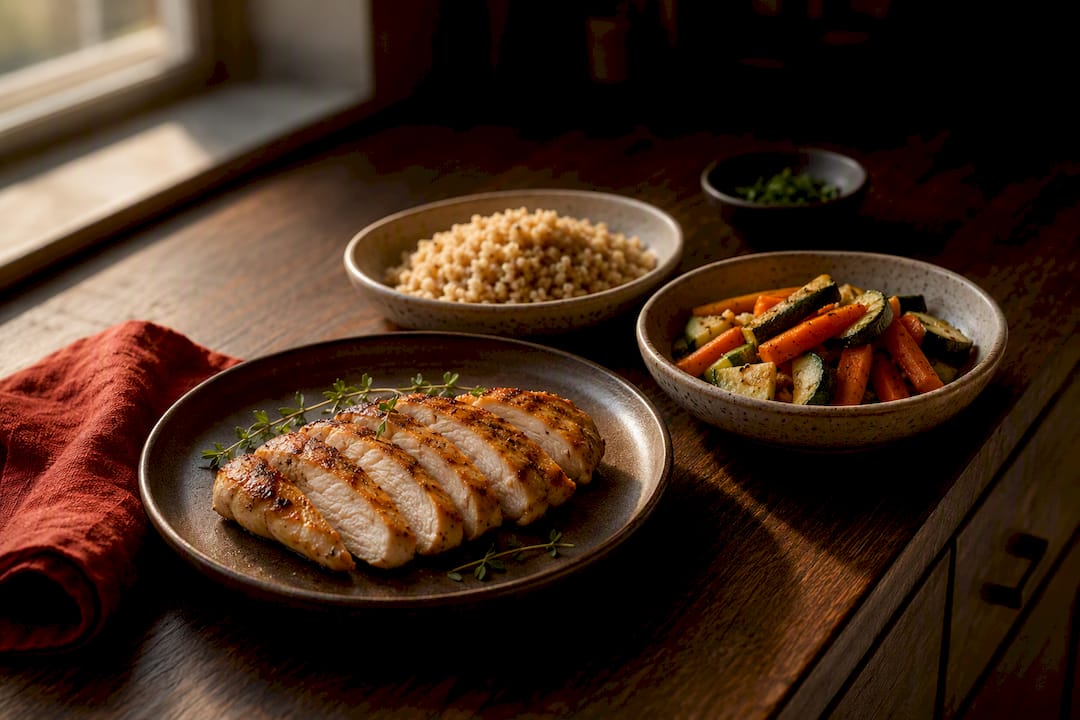
Start with a structured low-fermentation, low-FODMAP-informed plan built around plain proteins, cooked vegetables, and modest fat, then stick with it for 2 to 6 weeks while you log symptoms daily. That short restrictive window gives you enough signal to know if you’re on the right track without locking you into a diet forever. Below is a full 7-day plan you can adapt for methane or hydrogen tendencies, plus the reintroduction steps that come after. If you want it turned into a shopping list and guided recipes automatically, an app can do that part for you.
TL;DR:
- A low-fermentation, low-FODMAP diet typically lasts 2 to 6 weeks, focusing on plain proteins, cooked vegetables, and modest fats to reduce bacterial fermentation.
- Meal spacing of 3 to 5 hours is crucial to allow the migrating motor complex to clear residual bacteria, while constant grazing can hinder gut cleansing.
- For methane-dominant SIBO, prioritize gentle soluble fibers and limit resistant starch, whereas hydrogen-dominant cases may require stricter carbohydrate restrictions.
- Reintroduce foods gradually over 2 to 3 days after symptoms improve, adjusting fiber intake based on bowel patterns and avoiding multiple food triggers at once.
- Automated meal planning apps can simplify shopping and meal prep, helping maintain a sustainable SIBO management pattern tailored to individual responses.
Table of Contents
- What is a SIBO diet, and why does meal structure matter?
- Which SIBO diet approach should you actually start with?
- What foods should you avoid, and what can you swap in?
- A sample 7-day meal plan you can start this week
- How meal timing and habits support gut motility
- How do you reintroduce foods after the restrictive phase?
- How do you shop and prep for a week of SIBO-friendly meals?
- A practical perspective on making this stick
- Get a personalized SIBO-friendly plan without building it yourself
- Sources
What is a SIBO diet, and why does meal structure matter?
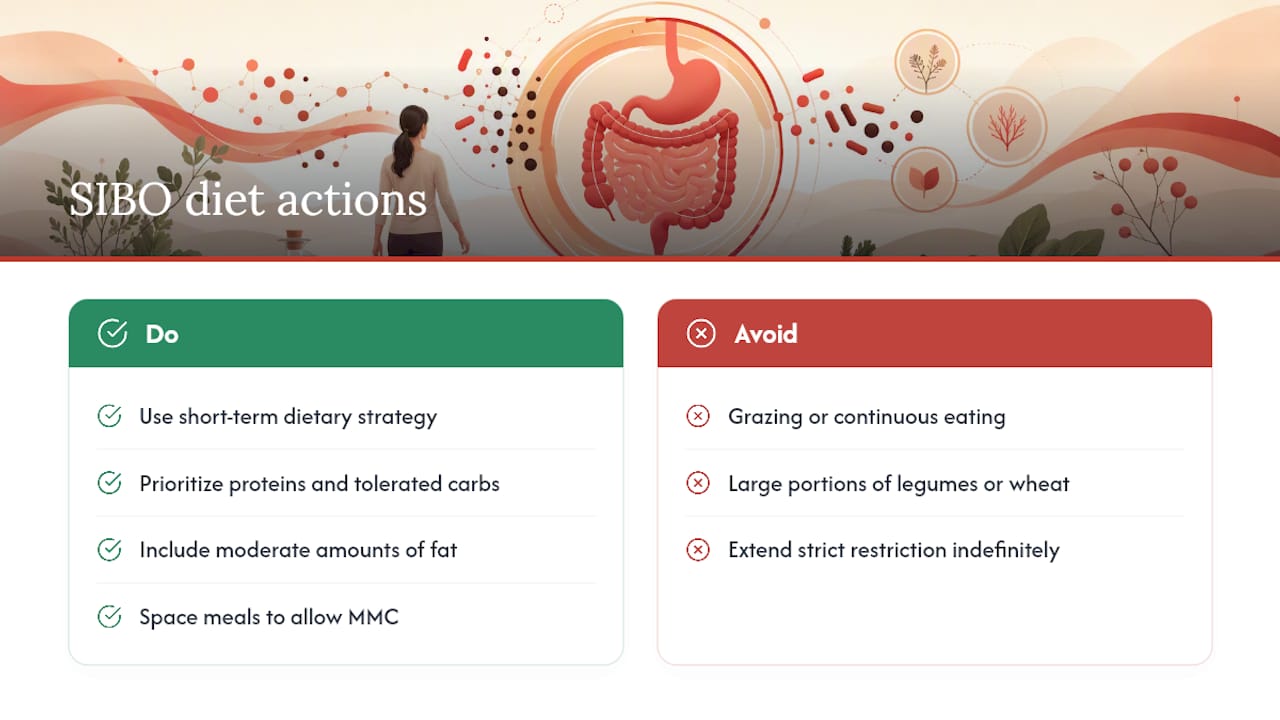
There’s no single official SIBO diet. What clinicians actually use is a mix of approaches, and dietary strategies for SIBO management are typically applied short-term, from a couple of weeks to a few months, with a plan to reintroduce foods afterward.
The logic is simple: bacteria in the small intestine ferment carbohydrates, and fermentation produces the gas behind bloating, cramping, and irregular bowel habits. Cutting fermentable carbs for a while starves that process down. That’s why most SIBO-friendly meals lean on proteins, well-tolerated carbs, and moderate fat rather than big bowls of legumes or wheat-based dishes.
Meal spacing matters just as much as meal content. Your gut has a housekeeping wave called the migrating motor complex (MMC) that sweeps residual bacteria out of the small intestine between meals, so continuous grazing can prevent this natural cleaning process.
Which SIBO diet approach should you actually start with?
Five approaches dominate the SIBO conversation, and each pulls a different lever.
- Low-FODMAP: The most studied option, built on evidence for symptom relief in IBS, and structured as a short elimination phase followed by systematic reintroduction.
- Low-Fermentation (Cedars-Sinai style): Focuses less on eliminating specific foods and more on meal timing, portion control, and cutting snacking to give the MMC room to work.
- Specific Carbohydrate Diet (SCD) and SIBO-specific food guides: Stricter carbohydrate limits, often used short-term by people who need a more aggressive starting point.
- Bi-phasic frameworks: Structure the restrictive phase and the reintroduction phase as two distinct stages with different food lists for each.
- Elemental diet: The only approach that has been directly studied as a SIBO treatment, using a predigested liquid formula for 2 to 3 weeks. It works, but it requires medical supervision, it’s expensive, and it’s hard to sustain socially.
Your starting point depends on severity, subtype, and how much structure you can realistically maintain. Someone with mild bloating and a busy schedule might do well starting with low-fermentation habits alone. Someone with more severe symptoms or methane-dominant SIBO may need the tighter carbohydrate control of SCD-style eating.
Pro Tip: Don’t jump straight to the elemental diet on your own. It has strong clinical backing, but it’s meant to be used under a clinician’s supervision, not as a DIY first move.
What foods should you avoid, and what can you swap in?
The foods most likely to trigger symptoms are the ones bacteria ferment fastest. Cleveland Clinic’s SIBO food guidance lists wheat, rye, beans, lentils, onions, mushrooms, cauliflower, apples, pears, and sugar alcohols like xylitol and sorbitol among the most common offenders.
Roughly six major food categories show up again and again on restriction lists: certain grains, legumes, alliums, cruciferous vegetables, high-fructose fruits, and sugar alcohols. That’s a wide net, but it still leaves plenty on your plate.
- Generally well tolerated: plain proteins (eggs, chicken, fish), certain fruits like grapes and oranges, vegetables like carrots and peeled, cooked zucchini, and grains such as white rice, millet, and quinoa in moderate amounts.
- Label red flags: inulin, chicory root, FOS (fructooligosaccharides), and polyols, all common additives that sneak fermentable fiber into packaged foods.
- Easy swaps: garlic-infused oil instead of raw garlic, green onion tops instead of the onion bulb, and strawberries in place of apple when you want something sweet.
Portion size counts too. A quarter cup of quinoa behaves differently than a full cup, so start small and adjust based on how you feel.
A sample 7-day meal plan you can start this week
Here’s a flexible template built on a small rotating set of tolerated ingredients. That repetition isn’t boring by accident. A modular weekly menu cuts decision fatigue and makes it much easier to tell which food caused a symptom later, because you’re not introducing ten new variables a day.
Day template: Breakfast built around eggs or a protein smoothie, lunch centered on a plain protein with cooked low-FODMAP vegetables, dinner similar to lunch with a starch like white rice, and one or two small snacks between meals rather than constant grazing.
- Day 1: Scrambled eggs with spinach; grilled chicken with roasted carrots and white rice; baked salmon with sautéed zucchini.
- Day 2: Rice porridge with blueberries; turkey lettuce wraps with bell pepper; beef stir-fry with peeled zucchini noodles.
- Day 3: Omelet with tolerated herbs; tuna salad over greens with olive oil; roast chicken with mashed potato and green beans.
- Day 4: Smoothie with lactose-free milk, strawberries, and spinach; shrimp with quinoa and cucumber; pork tenderloin with roasted squash.
- Day 5: Eggs with rice cakes; grilled fish with steamed carrots; chicken and rice soup with tolerated vegetables.
- Day 6: Overnight oats made with lactose-free milk (test tolerance first); turkey burger, no bun, with a side salad; baked cod with roasted potatoes.
- Day 7: Leftover-based batch meal; rotate two proteins and two vegetables from earlier in the week to reduce new-food exposure.
Notes for adapting the plan:
- Favor cooked, soft vegetables over raw ones for the first two weeks. Cooking breaks down some fiber structure and makes digestion easier on an already irritated gut.
- Vegetarians can swap animal protein for firm tofu or eggs; those with lactose issues should skip dairy milk entirely rather than testing it during the restrictive phase.
- Log a bloating score, stool consistency, gas frequency, and energy level each day. Patterns show up fast once you have a few days side by side.
- Methane-dominant tendencies: lean toward gentle soluble fiber and go easy on resistant starch (cooled rice, green bananas), since methane producers often deal with constipation.
- Hydrogen-dominant tendencies: you may need firmer restriction on fermentable carbs generally, since hydrogen production tends to track more closely with total fermentable load.
How meal timing and habits support gut motility
Spacing meals 3 to 5 hours apart gives the MMC time to complete its sweep between meals, which is part of why constant snacking works against you even if the snacks themselves are low-FODMAP. Grazing keeps your gut in “digest mode” and never lets that housekeeping wave finish.
A few habits reinforce this:
- Drink something warm on waking, like herbal tea, to gently signal your gut it’s time to get moving.
- Avoid large liquid volumes with meals. Big gulps of water alongside food can dilute stomach acid and slow digestion.
- Take a short walk after eating instead of sitting still. Light movement supports motility without demanding much effort.
Pro Tip: If you’re used to eating every two hours, stretch the gap gradually. Jumping straight to 5-hour spacing can spike hunger and make you overeat at the next meal.
How do you reintroduce foods after the restrictive phase?
Once symptoms settle for a week or two, reintroduce one food group at a time in a small portion, then wait 2 to 3 days before adding another. This isolates the culprit instead of muddying the water with five new foods at once.
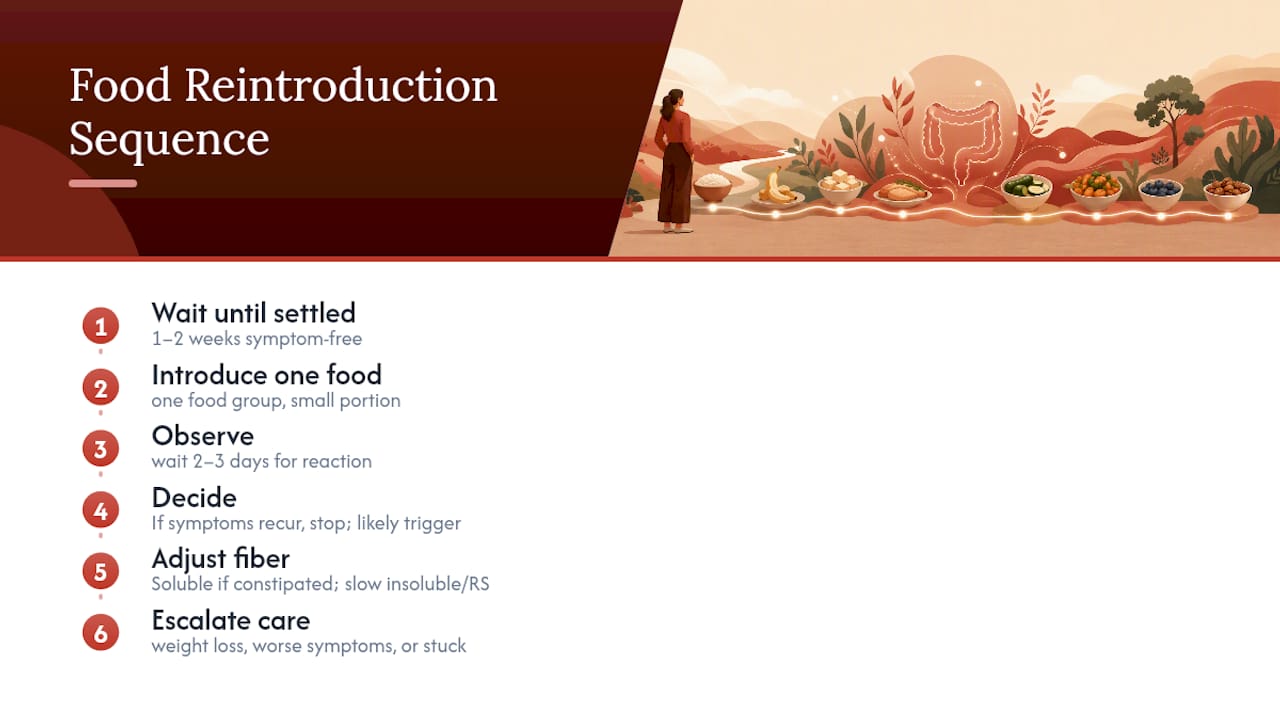
Adjust fiber and resistant starch based on your bowel pattern. If constipation is your main issue, add soluble fiber slowly. If diarrhea dominates, go slower on insoluble fiber and resistant starch until your gut settles.
Escalate to a dietitian or physician if you notice unintended weight loss, symptoms that worsen instead of improve, or if you’re still stuck after a few reintroduction cycles. Clinicians who specialize in SIBO consistently point out that no single diet works for everyone. Subtype, symptom pattern, and lifestyle all shape what your version of “the plan” should actually look like.
How do you shop and prep for a week of SIBO-friendly meals?
A little batch-cooking on Sunday saves you from decision fatigue every single night. Organize your list by where things live:
- Pantry: white rice, quinoa, millet, olive oil, garlic-infused oil, canned tuna or salmon.
- Fridge: eggs, lactose-free milk, fresh proteins for the first 2 to 3 days, carrots, zucchini, bell peppers.
- Freezer: extra proteins bought in bulk, pre-portioned berries, frozen green beans.
Cook a big batch of white rice, roast two or three proteins at once, and simmer a simple stew you can reheat through the week. For a deeper starter framework, Homecooked’s 7-day low-FODMAP guide walks through a longer template, and the gut-health recipe hub has more meal ideas if you get tired of rotating the same six ingredients. For seasonal variety, seed-based meal ideas can add tolerated toppings once you’ve confirmed seeds sit fine with your gut.
A practical perspective on making this stick
No SIBO plan works identically for two people, and that’s not a flaw in the plan. It’s the nature of gut symptoms tied to subtype, motility, and years of individual history. The goal isn’t a perfect week. It’s a sustainable pattern you can repeat without dreading dinner…
— 0xmaglev
Get a personalized SIBO-friendly plan without building it yourself
Building a week of SIBO-safe meals by hand, then converting it into a shopping list, then remembering which swaps you made for lactose or resistant starch, adds up to hours you probably don’t have. Some apps turn your symptom pattern and food preferences into a personalized meal plan automatically, then build the grocery list from it so you’re not standing in an aisle squinting at ingredient labels for hidden inulin.
The app walks you through each recipe step by step with built-in timers, which matters more than it sounds like when you’re already managing bloating and don’t want to overcook a piece of salmon while triple-checking a label. Take the Cottage Cheese Protein Bowl as an example of how a Homecooked recipe is formatted end to end, from ingredient swaps to guided steps. Start a plan this week and let the app handle the shopping list while you focus on tracking symptoms.
This article is general information, not a substitute for advice from a qualified doctor. Consult a qualified healthcare professional about your own circumstances before acting on anything here.
Sources
- Review: dietary approaches in SIBO management (PMC)
- SIBO diet: best and worst foods to eat — Cleveland Clinic
- SIBO-friendly meal planning: sample weekly menus and shopping lists